


Put your roof on the payroll.
Barns, workshops, warehouses and units have the best roofs in the county and the daftest daytime bills. Commercial solar is the same honest trade as our home installs, with bigger ladders.
Made at nine, used at nine.
Homes make solar all day and spend it at night. A business does the opposite of that problem: the kettle, the compressor and the cold store are all running exactly when the roof is earning.
Self-use is the whole game
Because a working site drinks its power in daylight hours, far more of the generation gets used on the spot instead of exported for pennies. That is what makes commercial arrays pay their way, and it's why we start every quote with your half-hourly usage, not our brochure.
- Best on daytime operations with big roofs
- Roof-scale arrays with battery storage to match
- Three-phase metering handled properly
- MCS and grid applications done for you
A shift on the roof.
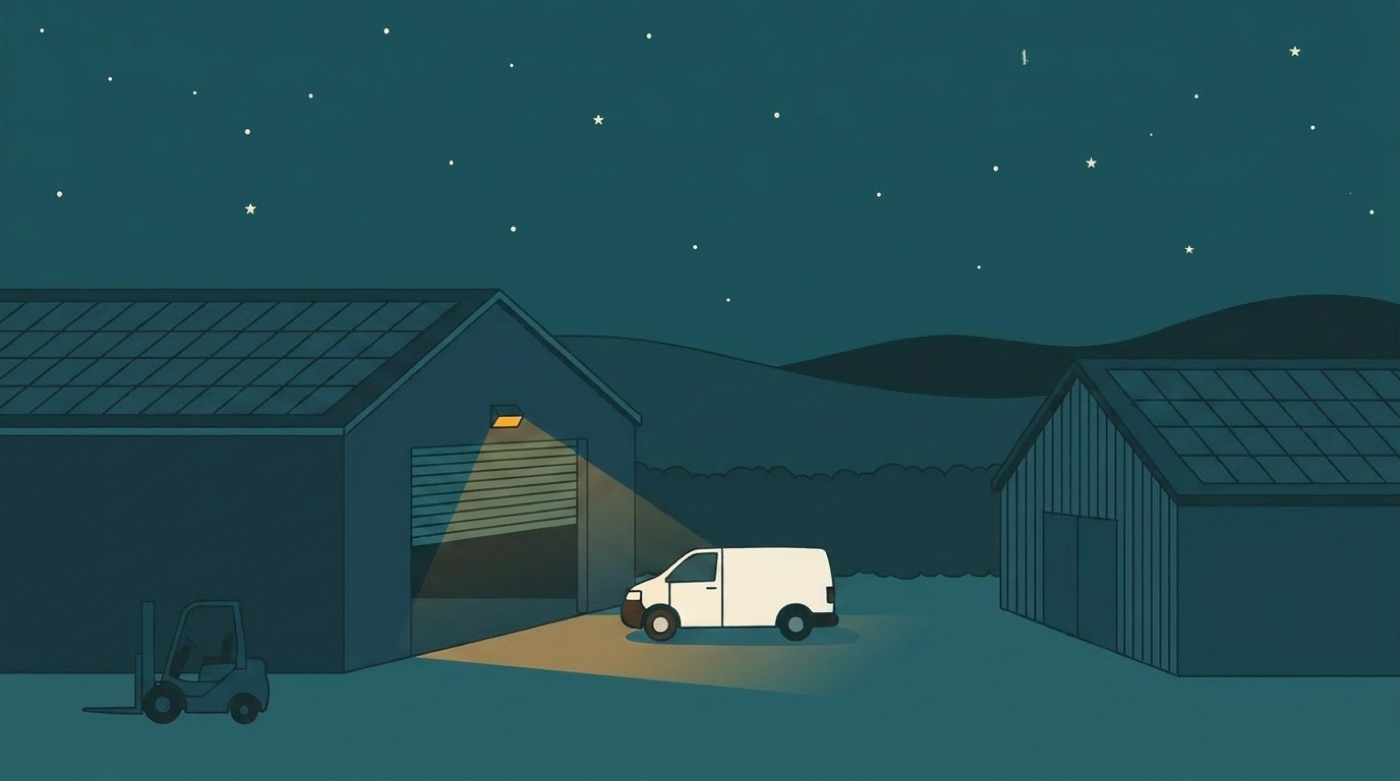
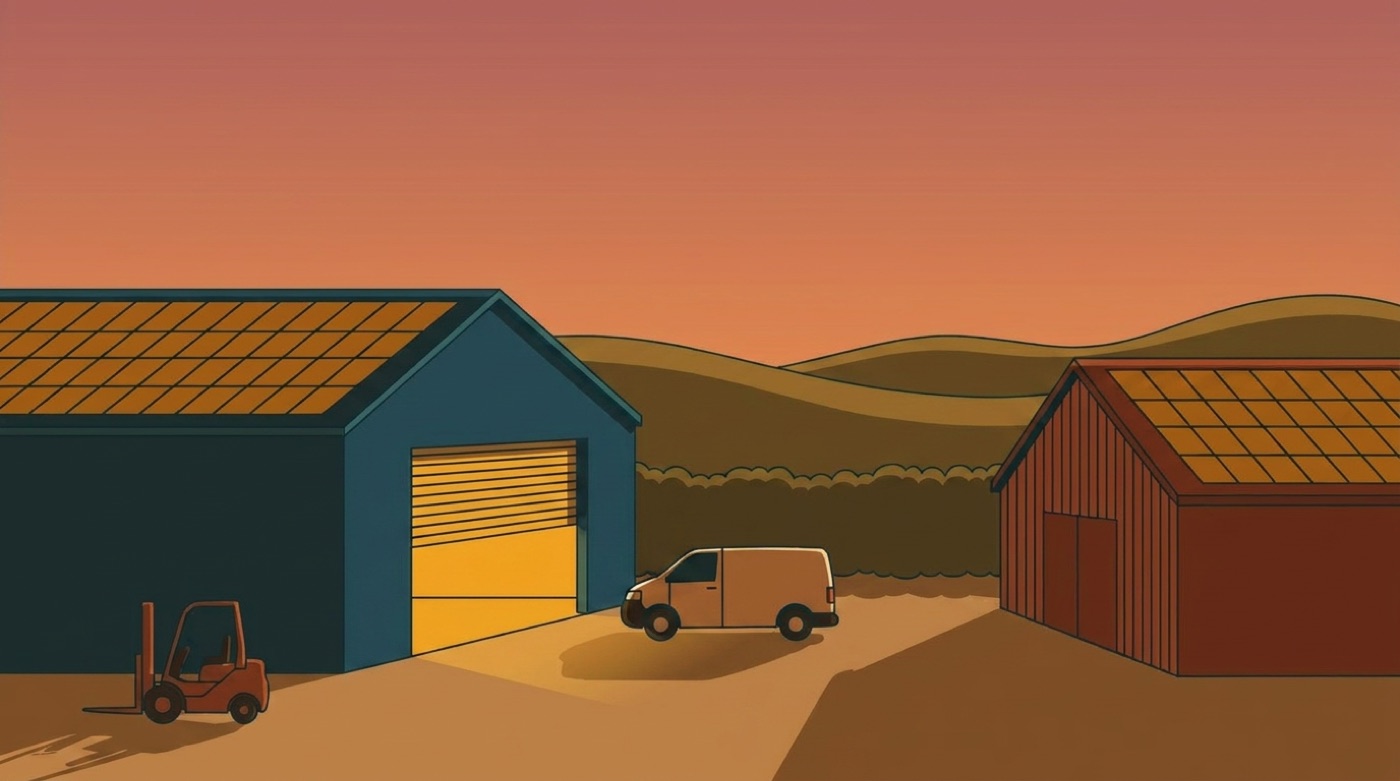
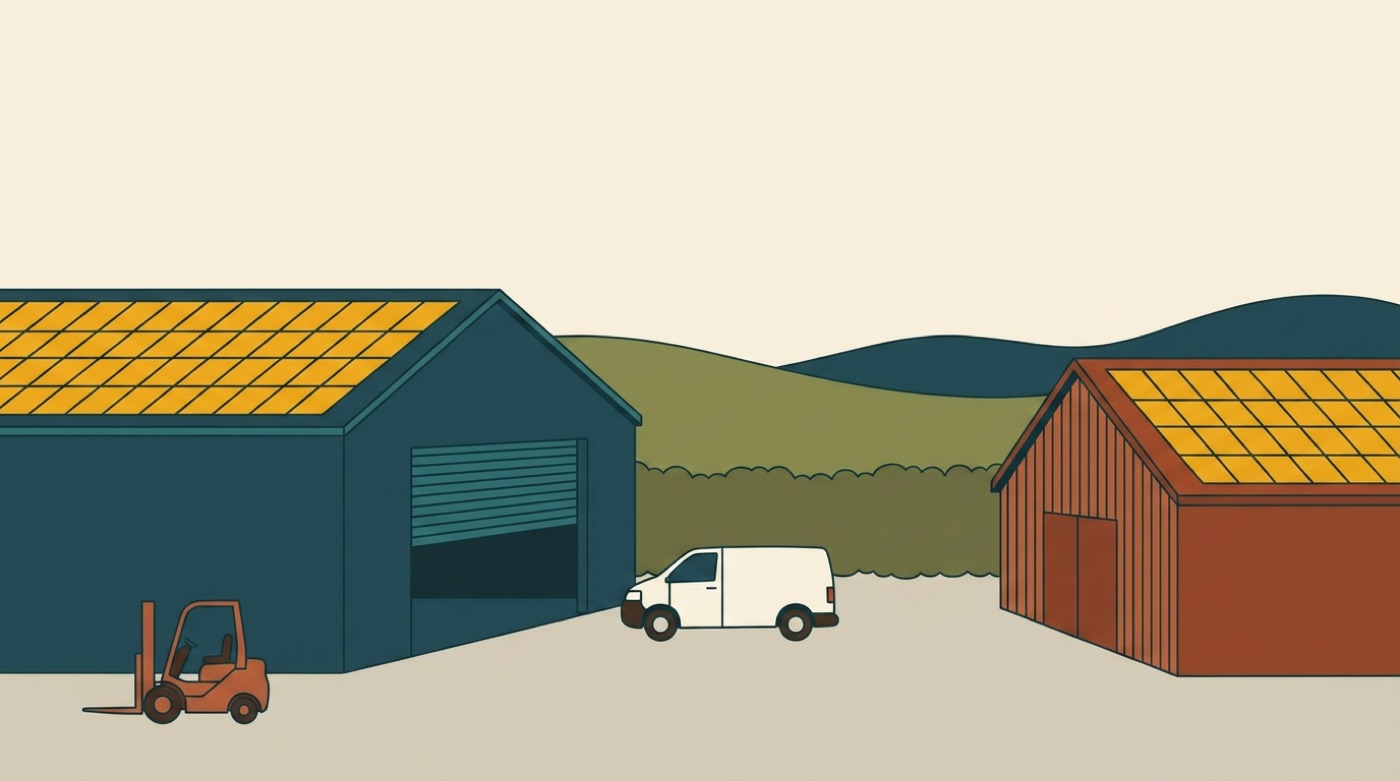
Drag the sun across a bright summer day on a 40kW roof like our Almondsbury job. The bright gold is power used on site as it's made. The pale gold is export.

- Time
- 05:00
- Making right now
- 0.0 kW
- Used on site so far
- 0.0 kWh
- Exported so far
- 0.0 kWh
The dashed line is the site's demand. On a working day most of the roof's output disappears straight into the machines under it, which is the whole trick.
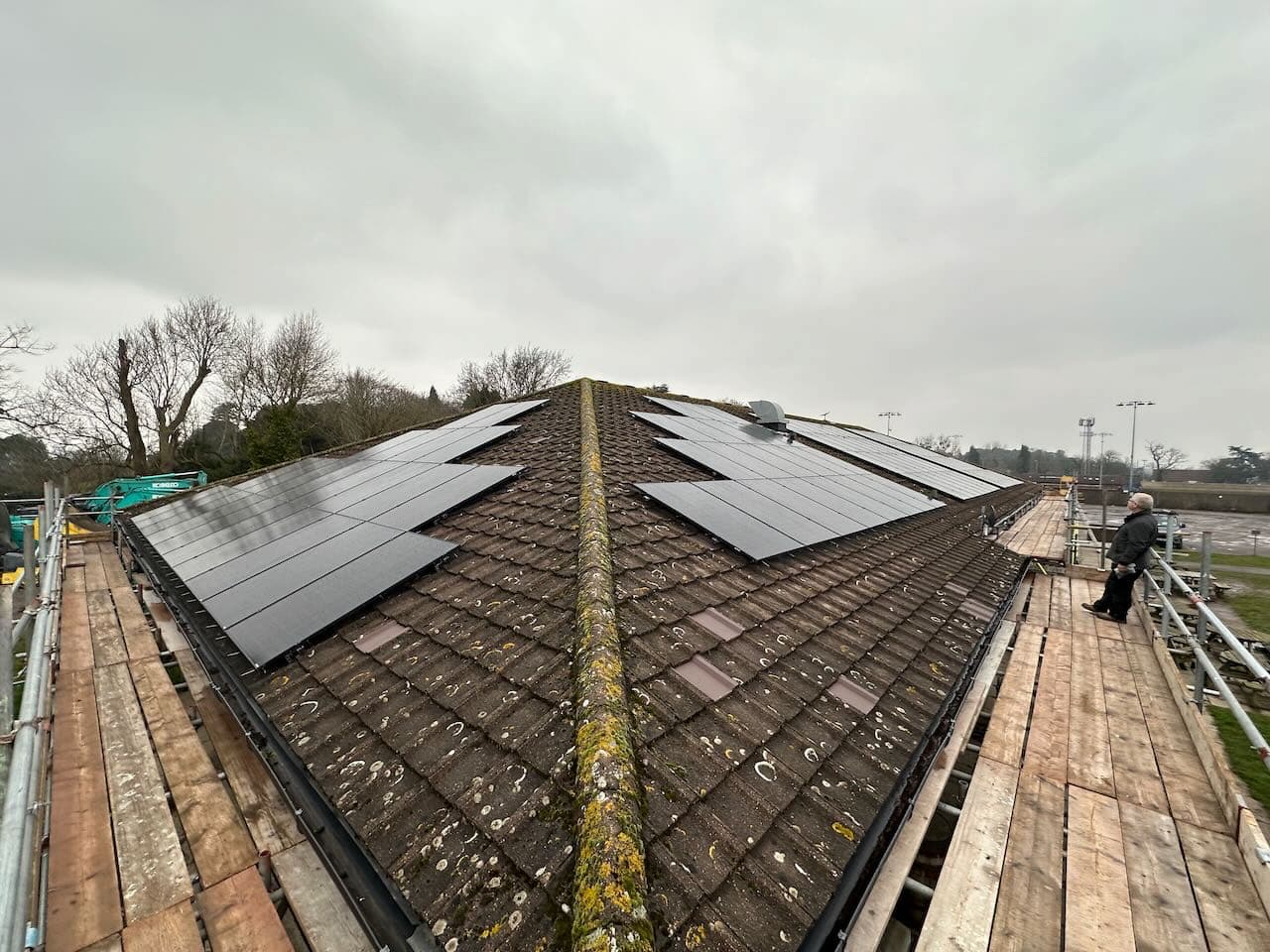
40kW, fitted without fuss
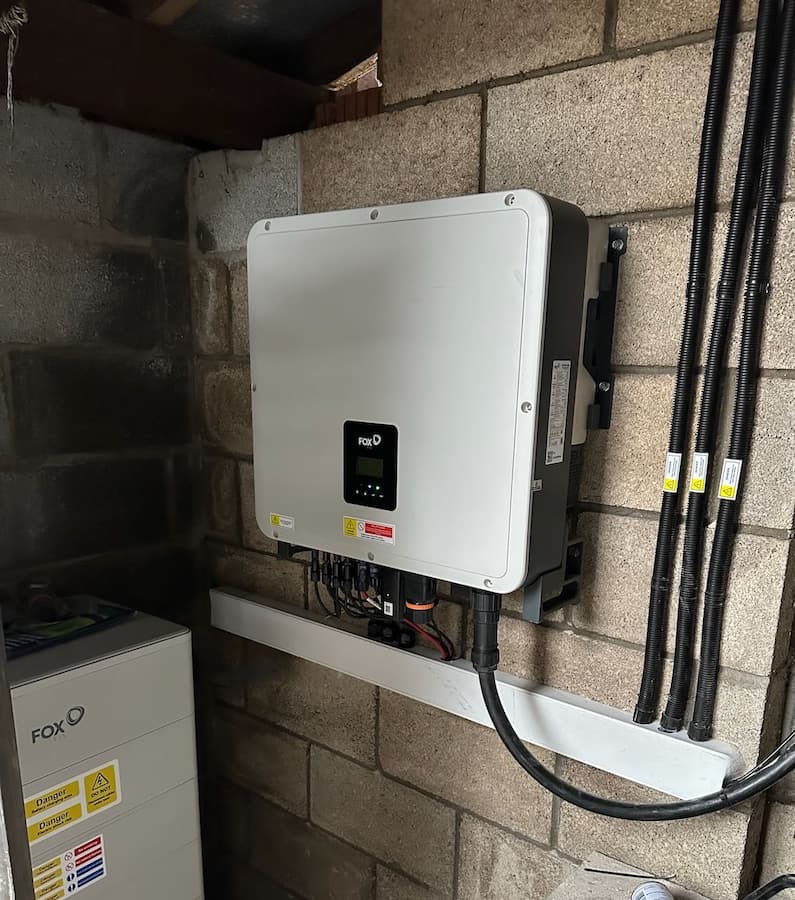
A club in Almondsbury with a bar, a kitchen and a bill to match: 40kW of panels, 30kWh of battery storage and a 30kW three-phase hybrid inverter, designed, fitted and signed off by our own NICEIC electricians. It now runs 59% self-sufficient across the year on its own metering.
- 40kW of panels across the roof
- 30kWh of battery storage
- A 30kW three-phase hybrid inverter
- 59% self-sufficient averaged across the year
Every site tells us something.
If your operation runs in daylight and your roof does nothing all day, there's probably a conversation worth having.
Farms and barns
Steel roofs, honest spans and daytime loads: milking, cooling, grain drying. Agri roofs are some of the best solar real estate in the South West.
Workshops and units
Compressors, welders, lifts and lighting, all drinking power from nine to five. Industrial units are where self-use percentages get genuinely silly.
Offices and shops
Computers, tills, refrigeration and air conditioning run on daylight hours too. Flat roofs are fine, we fit ballasted frames that don't puncture the membrane.
Fitted, earning, signed off.
Real installs from the van's camera roll. Drag through the pile.
Drag to rummage
"Their price was competitive and the service was great. An on site survey was followed by a detailed quotation and Dan kept us constantly updated with the G99 application and proposed install dates. The work was carried out brilliantly and we are over the moon with our new PV system."
"Dan came to do an initial assessment and was able to answer our questions and concerns. He kept us informed regarding starting date. We were clear about the costs from the start. They've done amazing job, very neat and tidy. Dan also helped set up the app so we didn't have to deal with the support ourselves."
Fair questions.
Will the install disrupt the business?+
Most of the work happens on the roof while your operation carries on underneath. The switchover itself needs a planned shutdown, which we schedule around you rather than the other way round. Almondsbury stayed running for the whole job.
Our roof is flat. Is that a problem?+
No. Flat roofs take ballasted mounting frames that angle the panels without a single hole in the membrane. We check the structure can carry the weight as part of the survey, and we tell you honestly if it can't.
What about three-phase and the grid paperwork?+
Commercial installs usually mean three-phase inverters and a formal application to the network operator before connection. We handle that paperwork as part of the job, because a system you can't legally switch on is just roof decoration.
Do batteries make sense for a business?+
Sometimes hugely, sometimes not at all. If you run seven days or into the evening, storage catches what the weekend or the afternoon peak would export. If you're strictly nine to five weekdays, the roof alone may do the job. We run your actual numbers and say which.
Who looks after it afterwards?+
We do. We're electricians first, so the same firm that fitted your array services it, monitors it and answers the phone about it. No handing you off to a maintenance company you've never met.
Your roof is already at work. It's just not earning.
Tell us about your site and your usage, and you'll get honest numbers back. If the maths doesn't stack up for your operation, we say so.